The Human Cost

Know Your Vial Research Team Published April 17, 2026 · Updated April 18, 2026

Deaths, hospitalizations, overdoses, and contamination events linked to compounded and gray-market GLP-1 products. These are not theoretical risks. They are documented outcomes.

≥10
Deaths linked to compounded semaglutide, confirmed by Novo Nordisk CEO on CNN
CNN, November 2024
≥100
Hospitalizations associated with compounded GLP-1 products
Novo Nordisk CEO statement, November 2024
1,150
FDA FAERS adverse event reports for compounded semaglutide (605) and tirzepatide (545)
FDA FAERS database, as of July 2025
20x
Overdose factor in FDA alert -- patients self-injecting 5-20x the intended dose due to mg/mL/unit confusion
FDA Safety Alert, 2024
~1,500%
Increase in GLP-1-related poison control calls since 2019
American Association of Poison Control Centers
159
Compounded GLP-1 poison control exposures by June 2024, up from 32 in all of 2023
AAPCC, 2024
Emergency room team rushing a patient on a gurney, motion blur conveying urgency, medical staff in blue scrubs
Woman sitting on the floor with her head in her hands, a scale and tape measure beside her
Documented harm includes 17 deaths, 100+ hospitalizations, and a 1,500% increase in poison control calls since 2019.
"Honestly, I'm quite alarmed by what we see in the US now."
Lars Fruergaard Jørgensen, CEO, Novo Nordisk, citing ≥10 deaths from compounded semaglutide -- CNN, November 2024
"We are aware of more than 100 people hospitalized and at least 10 deaths associated with compounded semaglutide."
Lars Fruergaard Jørgensen, same interview -- CNN, November 2024

The 20x Overdose Problem

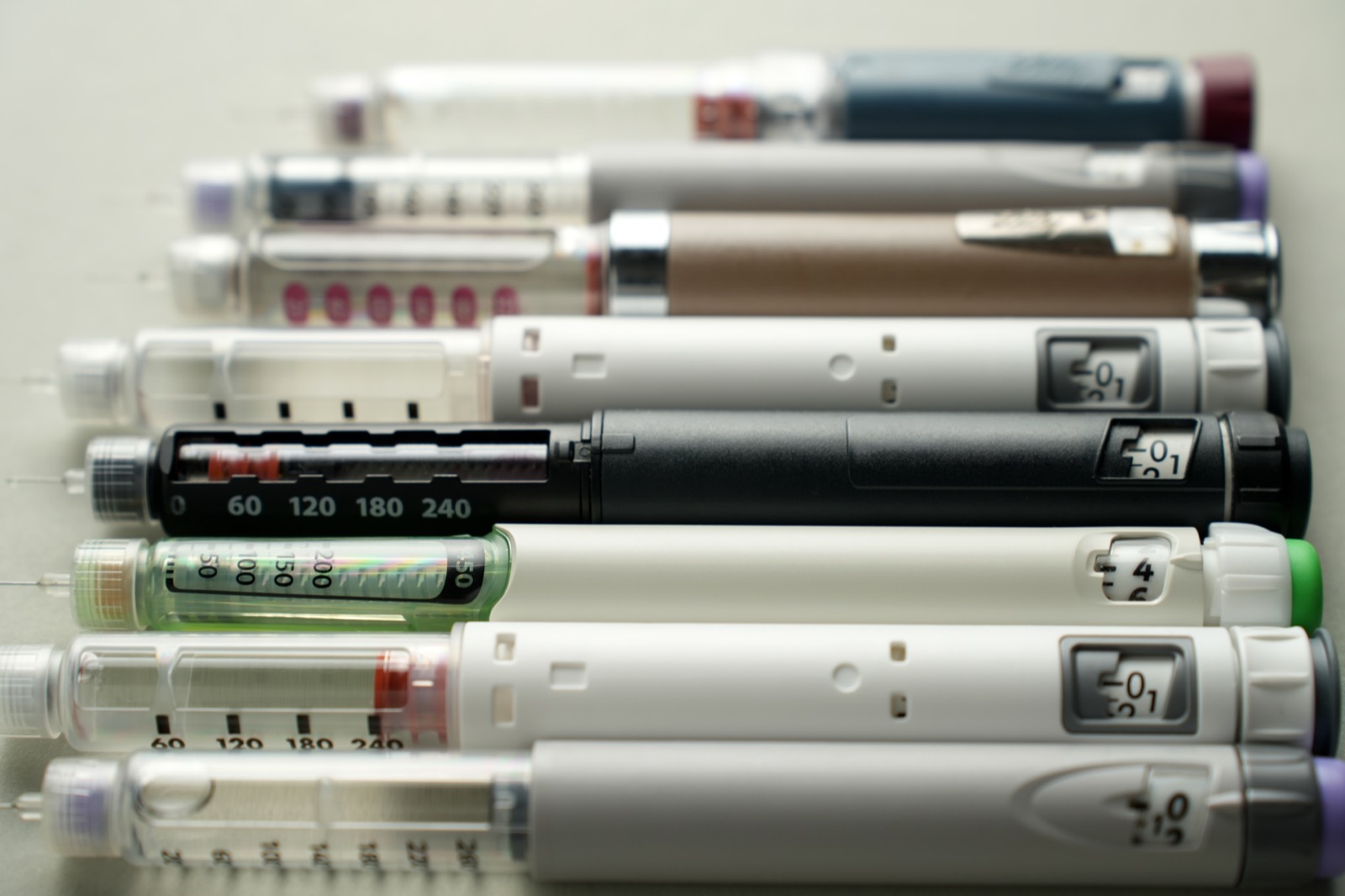
A row of different GLP-1 injection pen types laid side by side, illustrating the variety of devices patients must navigate

In 2024, the FDA issued a safety alert after identifying a pattern of patients self-injecting 5 to 20 times their intended dose of compounded semaglutide. The root cause: confusion between milligrams, milliliters, and units.

How It Happens

FDA-approved Ozempic and Wegovy use pre-filled pens with fixed doses -- the patient clicks, injects, done. Compounded semaglutide comes in multi-dose vials requiring the patient to calculate and draw the correct volume using an insulin syringe. Vials are labeled in mg/mL. Syringes are marked in units. The conversion is not intuitive, and prescribers frequently fail to provide clear dosing instructions. A patient prescribed 0.25mg who draws 0.25mL from a 5mg/mL vial has just injected 1.25mg -- five times the intended dose.

This is not user error. It is a systems failure. The compounding model takes a drug designed for foolproof delivery and repackages it into a format that requires pharmaceutical math from patients who have no training in pharmaceutical math.


Documented Incidents

The FDA.gov website displayed through a magnifying glass, emphasizing regulatory documentation and oversight

ProRx LLC (Exton, PA) -- Flying Insects in Sterile Area

FDA inspection found flying insects inside the sterile compounding area, inadequate gowning, and no contamination protocols. The result: recall of 36,000+ semaglutide vials and 2,761 tirzepatide vials for "lack of assurance of sterility." These had already been shipped to patients. Patients who had already injected product from these vials were not reached.

Kennett Square, PA -- Failed Sterility, Zero Notification

Semaglutide tested at 79.9% potency. Tirzepatide failed sterility testing and was distributed to patients anyway. Of 23 out-of-spec investigations, none followed protocol. No patient notification. Product that failed sterility -- meaning it may have contained live bacteria -- was injected by patients who were never informed.

Counterfeit Ozempic -- Insulin Glargine

Counterfeit Ozempic pens entered the US supply chain containing insulin glargine rather than semaglutide. Three patients were hospitalized for hypoglycemia. Insulin glargine causes rapid, dangerous drops in blood sugar that can lead to seizures, coma, and death -- a risk that does not exist with semaglutide.

Dr. Matthew Lewis (Ashland, KY) -- "Meal Prep" on Venmo

Bought "for lab research only" semaglutide from California and Georgia suppliers. Injected patients without telling them it wasn't FDA-approved. Hid $249,044 in transactions via Venmo and Afterpay labeled "Meal Prep." Pleaded guilty April 2025. His patients received compounded product with no pharmacist oversight, no sterility verification, and no adverse event reporting.

These aren't hypothetical risks. They're documented in FDA databases and court records. There's a safer path.

Find Care →

Person's bare feet standing on a bathroom scale, looking down at the number, the moment of decision that drives people toward gray-market drugs

NAION Vision Loss Signal

A study published in JAMA Ophthalmology identified a statistically significant association between GLP-1 agonist use and non-arteritic anterior ischemic optic neuropathy (NAION) -- a form of sudden vision loss caused by reduced blood flow to the optic nerve.

4.28x
Hazard ratio for NAION in diabetic patients taking semaglutide vs. non-GLP-1 diabetes medications
JAMA Ophthalmology, 2024
7.64x
Hazard ratio for NAION in obese (non-diabetic) patients taking semaglutide for weight loss
JAMA Ophthalmology, 2024

Important Context

This signal applies to all semaglutide use, including FDA-approved products. It is included here because gray-market users often lack the physician monitoring that would flag early visual symptoms. NAION causes permanent vision loss. There is no treatment. Early detection is the only mitigation, and it requires the kind of regular clinical follow-up that self-administered gray-market protocols typically omit.


Regulatory Actions, 2023-2025

October 2023
FDA issues warning on compounded semaglutide adverse events
Agency documents reports of nausea, diarrhea, and adverse reactions from compounded versions distinct from known FDA-approved product profiles.
January 2024
Counterfeit Ozempic pens identified in US supply
Three patients hospitalized for hypoglycemia. Pens contained insulin glargine instead of semaglutide.
May 2024
FDA 20x overdose safety alert
Patients injecting 5-20x intended dose due to mg/mL/unit confusion with compounded multi-dose vials.
June 2024
ProRx LLC recalls 36,000+ vials
FDA inspectors found flying insects in sterile compounding area. Facility-wide recall issued.
July 2024
Poison control exposures hit 159 for compounded GLP-1s
Already 5x the full-year 2023 total of 32 exposures, with six months remaining.
November 2024
Novo CEO confirms 10+ deaths, 100+ hospitalizations
Lars Fruergaard Jørgensen states figures publicly on CNN, citing Novo Nordisk's internal tracking of compounded semaglutide adverse events.
July 2025
FDA FAERS reaches 1,150 compounded GLP-1 reports
605 semaglutide and 545 tirzepatide adverse event reports in the FAERS database from compounded products.

Licensed physicians. FDA-approved medications. Actual pharmaceutical oversight. Find legitimate care.

Find Legitimate Care →

Methodology & Sources

Harm data on this page is sourced from FDA adverse event databases, manufacturer disclosures, poison control center reports, federal enforcement records, and peer-reviewed ophthalmology research. Key sources:

  • FDA FAERS (Adverse Event Reporting System) -- compounded semaglutide and tirzepatide reports through July 2025
  • CNN interview with Novo Nordisk CEO Lars Fruergaard Jørgensen, November 2024
  • FDA Safety Alerts -- overdose dosing confusion, counterfeit Ozempic pens
  • American Association of Poison Control Centers -- compounded GLP-1 exposure data, 2019-2024
  • JAMA Ophthalmology -- NAION hazard ratio study, 2024
  • DOJ press releases -- Dr. Matthew Lewis guilty plea
  • FDA Form 483 inspection reports -- ProRx LLC, Kennett Square facility

FAERS reports are voluntarily submitted and do not establish causation. Death and hospitalization counts represent minimum confirmed figures. Actual numbers are likely higher due to underreporting.

Find Legitimate Care →